
Fiscal
Fiscal Stabilization
When the math no longer works — structural deficits emerging, AB 1200 certification slipping toward Qualified or Negative, or county fiscal advisors engaged — districts need more than analysis. They need a stabilization plan that can be presented, defended, and executed within the timeline a county will accept.
Our approach
How we work
What you get
Deliverables
- Diagnostic analysis — root cause of structural deficit, one-time vs ongoing exposures
- Multi-year stabilization plan with sequenced action items and quantified savings/revenue
- Reserves rebuilding strategy aligned to county and FCMAT expectations
- Board presentation materials — explaining the plan to political stakeholders
- County coordination — interim and annual reporting to the County Office of Education
- Cabinet support during plan execution (typically 12–24 months)
- AB 1200 certification path — moving from Qualified or Negative back to Positive
Outcomes
Districts we've worked with have moved from Qualified back to Positive certification within 18–36 months while preserving instructional priorities.
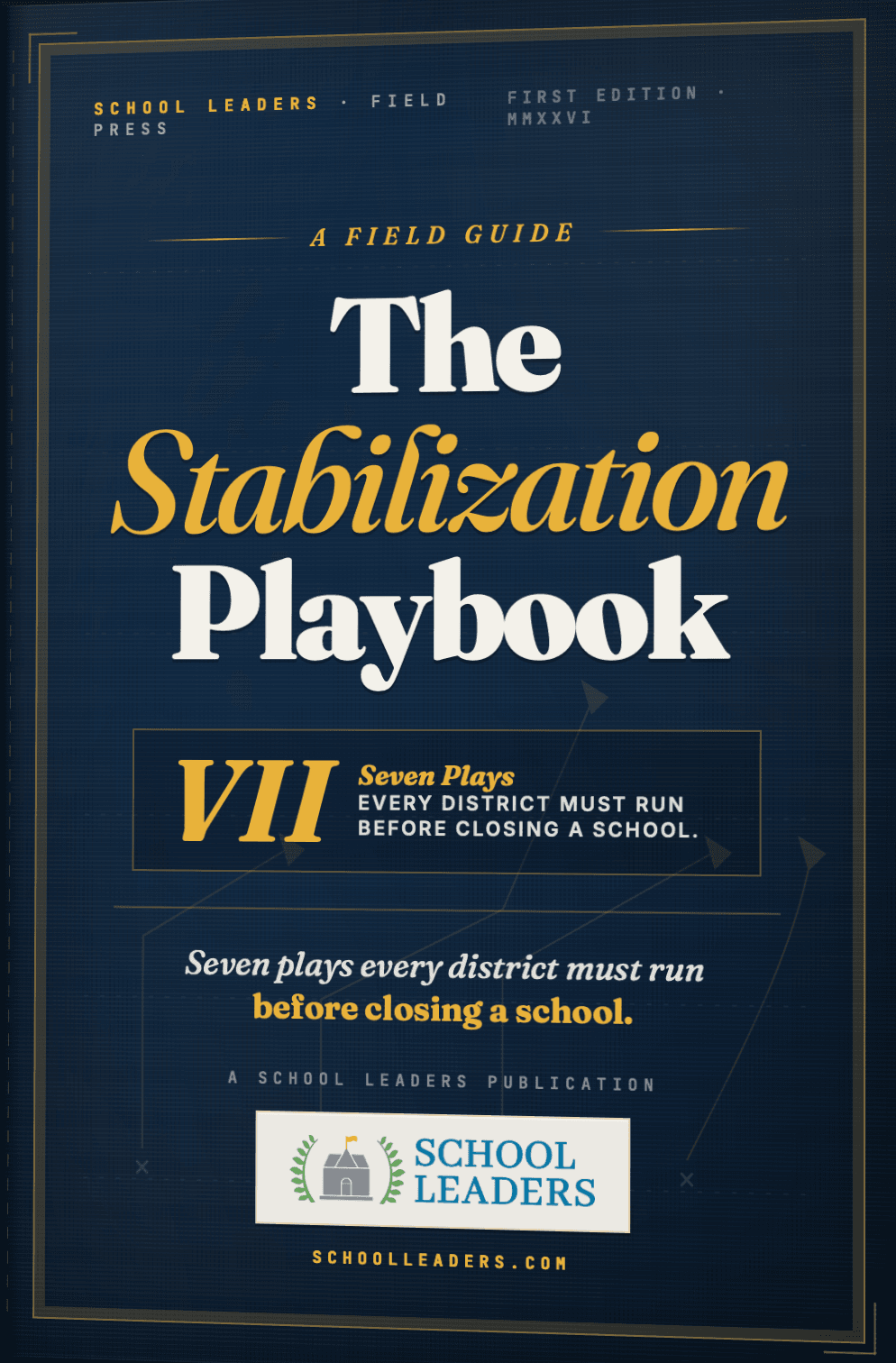
We wrote the book on this
The Stabilization Playbook
Seven Plays Every District Must Run Before Closing a School
Authored by School Leaders. Over 10,000 copies in use across California school districts.
Get the playbookFrequently asked
Questions districts ask us
When should a district engage a fiscal stabilization partner?
Three triggers usually surface the need: (1) Second Interim showing a Qualified or Negative path, (2) the county fiscal advisor flagging concerns or being formally assigned, or (3) reserves trending toward or below the state minimum with no clear plan to rebuild. The earlier the engagement, the more options remain on the table.
How does fiscal stabilization differ from a multi-year projection?
A multi-year projection is a tool — it shows where the district is heading. Fiscal stabilization is the work of changing that direction: diagnosing why the projection is bad, building the action plan to fix it, defending that plan to the board and county, and supporting the cabinet through execution.
What's the difference between fiscal stabilization and FCMAT engagement?
FCMAT (Fiscal Crisis & Management Assistance Team) is a state-funded service that produces a written report. Our fiscal stabilization work is a longer engagement that includes plan design, board engagement, county coordination, and execution support — typically engaging before or alongside a FCMAT review, not as a replacement.
How long does fiscal stabilization typically take?
12–24 months for active engagement. Moving certification from Qualified or Negative back to Positive usually takes 18–36 months, with the heaviest lift in the first 12 months. Most engagements include monthly reporting and quarterly board updates.
Ready to talk about fiscal stabilization?
30 minutes with one of our advisors. We'll listen first, share where we've seen this play out, and tell you honestly whether we can help.