
Insight
You Passed the Bond—Now What? A Superintendent’s First 90 Days Guide
March 30, 2025
You passed your school bond—now what? This 90-day guide for superintendents outlines the critical steps to take after voter approval, including quick wins, team structure, oversight committees, and community trust strategies. Learn how to turn momentum into measurable impact.
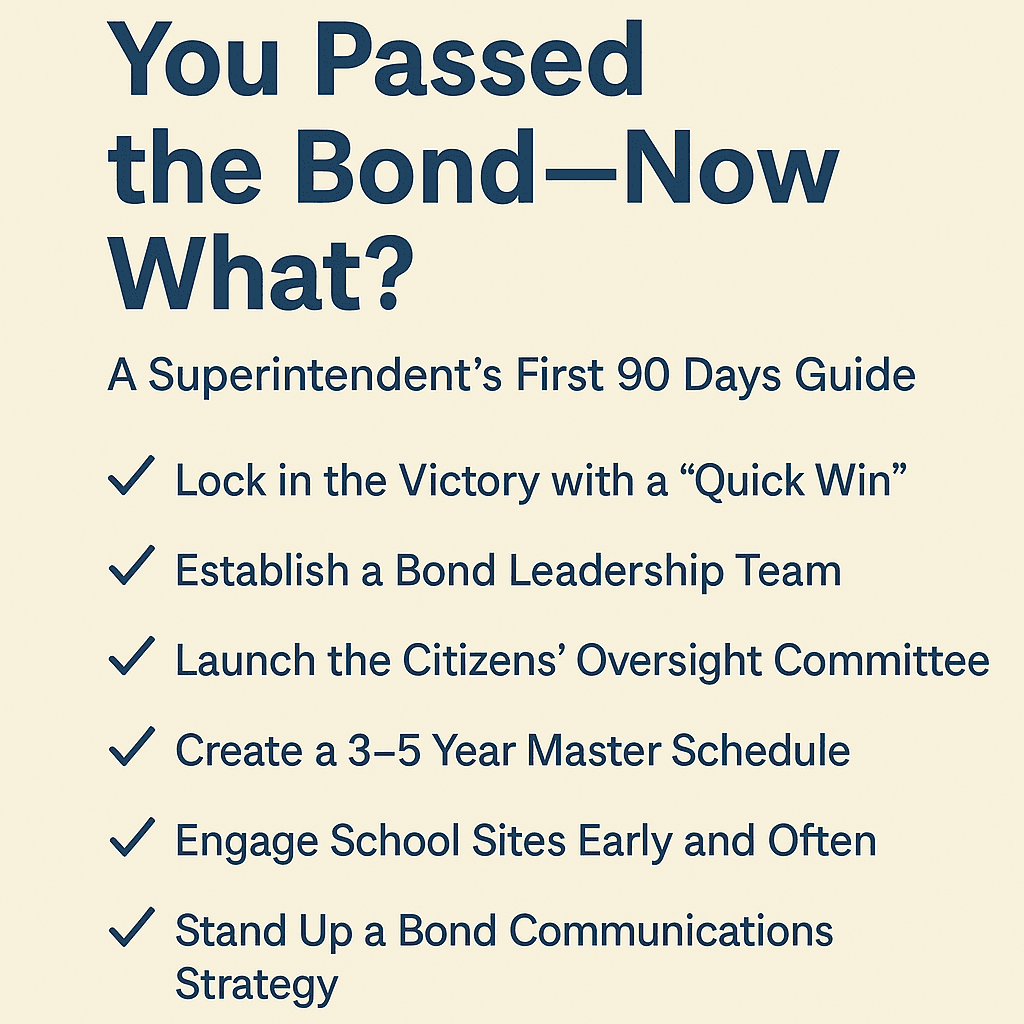
Passing a school bond is a huge accomplishment—congratulations! The campaign is over, the voters have spoken, and now the real work begins. As a superintendent or district leader, those first 90 days post-election are critical. The decisions you make (or delay) can define the long-term success of your bond program and either build or erode the trust your community placed in you at the ballot box.
At School Leaders, we specialize in helping school districts navigate these exact moments. Here’s our guide to what effective superintendents do in the first 90 days after passing a bond—and how you can set your district up for long-term success.
1. Lock in the Victory with a “Quick Win”
After voters approve your bond, they expect to see action. While major construction projects take time, identifying and completing a small, visible, non-DSA (Division of the State Architect) project in the first 90 days is powerful.
Quick win ideas:
- Painting refreshes
- Campus signage or wayfinding upgrades
- Asphalt repairs or striping
- Classroom furniture or tech deployment
These build trust early—and remind your community that their vote mattered.
2. Establish a Bond Leadership Team
You need a structure before you build a building. This is the time to clarify internal responsibilities and select external partners.
Key roles to clarify:
- Bond Program Manager (in-house or consultant)
- Project Managers
- Fiscal oversight (Business Office)
- Communications Lead
- School site representatives
Pro tip: Create a charter document outlining roles, meeting frequency, and decision-making authority. Clarity now prevents confusion later.
3. Launch the Citizens’ Oversight Committee (COC)
Your bond likely came with a legal requirement to form a COC, but this isn’t just a formality—it’s your accountability engine.
Do this well:
- Recruit a diverse, qualified committee
- Establish meeting cadence and structure
- Provide training on Brown Act compliance and their review role
- Publish agendas and minutes online from Day One
Transparency is currency. Treat your COC like a partner, not a burden.
4. Create a 3–5 Year Master Schedule
This is where vision meets logistics. You can’t do everything at once—nor should you. A high-level, phased master schedule helps prioritize projects, manage cash flow, and align with state funding timelines.
Start by mapping:
- DSA/modernization timelines
- Summer construction windows
- Major milestone celebrations
- TRANs and bond drawdown timelines
This schedule will evolve—but it starts now.
5. Engage School Sites Early and Often
Your principals and site staff are your allies, not your obstacles. Create space in the first 90 days to listen to their needs, concerns, and ideas.
What this looks like:
- Host input meetings at each site
- Use visual boards or surveys to gather wish list items
- Clarify what is and isn’t in scope based on bond language
- Share back findings to build alignment
This builds ownership and reduces resistance down the line.
6. Stand Up a Bond Communications Strategy
One of the biggest mistakes districts make is going silent after the bond passes. The narrative is yours to tell—start now.
Essential communications in the first 90 days:
- A celebratory "thank you" video or email from the superintendent
- Bond program landing page on your website
- Social media and e-newsletter updates on upcoming projects
- A communications calendar tied to the master schedule
Make your community part of the journey.
7. Start the Clock on Long-Term Planning
The first 90 days are also about thinking 3–5 years ahead. Begin conversations around:
- State matching funds and grant applications (e.g., Prop 2)
- Planning for future bonds or parcel taxes
- Building internal project management capacity
- Updating your Facility Master Plan, if needed
Your first bond project is a foundation for the next phase of district excellence.
Final Thought: Lead Like You’re Still Campaigning
During the bond campaign, you were visible, present, and responsive. Don’t stop now. The difference is you’re no longer asking for votes—you’re delivering on promises.
At School Leaders, we help superintendents turn momentum into measurable impact. Whether you need strategic planning, bond team support, or communications expertise, we’re here to walk with you every step of the way.
You passed the bond. Now let’s build the future.